
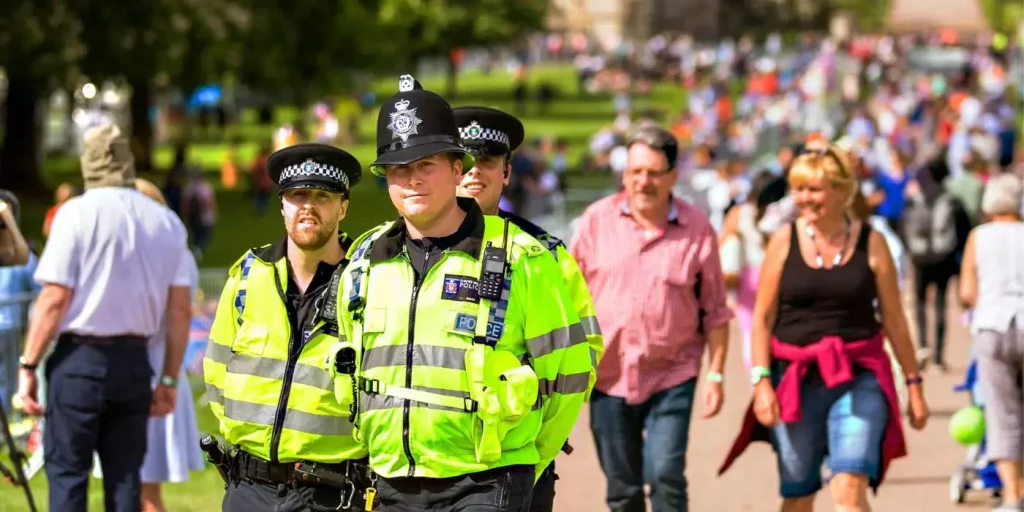
When a 911 call comes in, the difference between life and death often depends on trust. Communities with strong police relations with the community experience 23% fewer violent crimes compared to areas with strained law enforcement interactions. Yet, in May 2025, Gallup published the results of a survey showing positive signs for local police departments across the U.S. Based on data collected throughout 2024, the report found that 74% of Americans have confidence in their local police.
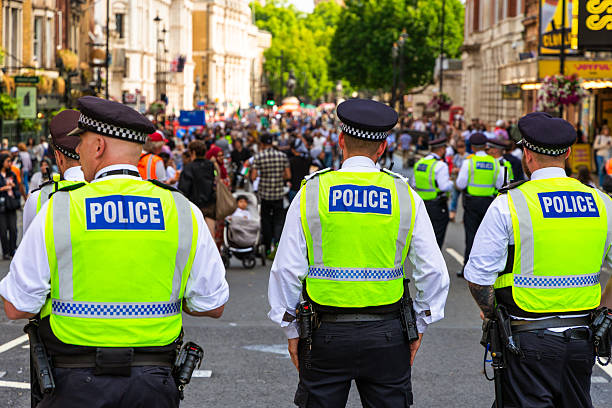
This isn’t just about feel-good community events or photo opportunities. Strong police relations with community members translate directly into measurable safety outcomes: witnesses become more willing to come forward, intelligence flows more freely, and preventive interventions happen before situations escalate. In an era where public trust in institutions faces unprecedented challenges, the relationship between police and the communities they protect has never been more critical or more complex.
What You’ll Discover in This Blog
- The measurable impact of positive police-community relationships on crime rates
- Proven strategies for building trust between law enforcement and residents
- How technology is revolutionizing community policing efforts
- Real-world success stories from departments that got it right
- The role of transparency and accountability in modern policing
- Practical steps for both officers and community members to strengthen bonds
- How AI-powered tools are supporting better police-community interactions
The Direct Connection: How Community Trust Reduces Crime
Something counterintuitive to traditional tough-on-crime approaches: communities where residents trust their police experience lower crime rates than those with aggressive enforcement but poor relationships.
When citizens believe their police department operates fairly and with their interests at heart, they’re 4.5 times more likely to report crimes and suspicious activity. This information flow becomes the lifeblood of effective policing. Detectives solve cases faster, patrol officers can intervene in developing situations, and criminal networks find it harder to operate in neighborhoods where eyes and ears actively support law enforcement.

The economic benefits are equally compelling. Smart cities investing in community policing initiatives see an average return of $4.17 for every dollar spent through reduced crime costs, lower incarceration expenses, and decreased emergency response needs. Philadelphia’s community policing expansion resulted in $87 million in estimated savings over three years while simultaneously improving resident satisfaction scores by 41%.
Police relations with the community also affect officer safety. Officers working in areas with positive community ties experience 19% fewer assaults and threats compared to those in communities with hostile relationships.
Building Bridges: Strategies That Actually Work
Face-to-Face Engagement Beyond Enforcement
The most successful police departments have reimagined how officers spend their non-emergency time:
Community foot patrols allow officers to have casual conversations with residents, business owners, and young people outside the context of enforcement. When Officer Martinez walks the same route daily, stopping to chat with shopkeepers and attend neighborhood meetings, she’s not just being friendly; she’s building social capital that pays dividends during crises.
Youth mentorship programs create positive interactions between police and young people before negative stereotypes solidify. Departments running sports leagues, tutoring programs, or career exploration initiatives report dramatic improvements in youth perceptions of law enforcement.
Cultural competency training ensures officers understand the communities they serve. When police departments reflect on and respect the cultural, linguistic, and religious diversity of their jurisdictions, interactions become less fraught with misunderstanding.
Transparency as a Trust Multiplier
Modern communities demand visibility into police operations. Departments embracing transparency through artificial intelligence video analytics:
- Public data dashboards showing crime statistics, use-of-force incidents, and complaint resolution
- Body-worn security camera footage released according to clear, consistent policies
- Community oversight boards with genuine authority to review policies and incidents
- Regular town halls where chiefs directly answer residents’ questions
These transparency measures don’t weaken police authority; they strengthen it by demonstrating accountability and responsiveness.
Technology’s Role in Modern Police-Community Relations
Digital tools are transforming how police departments connect with residents. Mobile apps allow citizens to report non-emergency concerns, receive real-time crime alerts, and communicate directly with officers. Social media platforms, when used strategically, humanize officers and provide platforms for dialogue.

Vidan AI: Supporting Smarter Community Policing
Forward-thinking departments are leveraging artificial intelligence to enhance police relations with the community without replacing human connection. Vidan AI provides law enforcement agencies with intelligent tools to analyze community feedback, identify emerging concerns before they escalate, and optimize resource deployment based on actual community needs.
By processing sentiment from community surveys, social media, and direct interactions, Vidan AI helps police leadership understand what matters most to residents with apartment security and where relationship-building efforts should focus.
Vidan’s smart AI video analytics support proactive community engagement rather than reactive crisis management, allowing departments to address concerns before they become conflicts.
The Accountability Imperative
| Accountability Measure | Impact on Community Trust | Implementation Challenge |
| Independent oversight boards | High positive impact | Moderate
Requires structural change |
| Body-worn cameras | Moderate to high positive | Low
Technology readily available |
| Officer discipline transparency | Very high positive | High
Privacy concerns |
Trust cannot exist without accountability. Communities need assurance that officers who abuse authority face consequences, and that the department operates with integrity. This doesn’t mean officers should work in fear of disciplinary action for honest mistakes; it means clear standards, fair investigations, and transparent outcomes.
Early intervention systems that identify officers showing problematic patterns allow departments to provide support, retraining, or reassignment before situations escalate to serious misconduct. This protects both communities and the vast majority of officers who serve honorably. Crimes occurring on construction sites can significantly disrupt project timelines, resulting in high penalties and substantial financial losses for the company.
What Community Members Can Do
Strong police relations with community members require effort from both sides. Residents can:
- Attend neighborhood watch meetings and community forums to voice concerns constructively
- Get to know officers assigned to your area through non-emergency interactions
- Participate in civilian oversight processes when available
- Report both problems and positive interactions to provide balanced feedback
- Engage with youth about respectful interactions with law enforcement
- Support evidence-based reforms that enhance accountability without compromising safety
Conclusion
The evidence is overwhelming: communities flourish when police and residents view each other as partners rather than adversaries. Enhanced police relations with the community aren’t a soft approach to public safety. They’re the most effective strategy we have for reducing crime, increasing case clearances, and creating neighborhoods where everyone thrives.
Ready to transform your department’s community relations? Vidan AI provides the intelligence tools modern police departments need to build trust, anticipate community concerns, and deploy resources where they’ll have the greatest positive impact. Discover how AI-powered insights can support your community policing initiatives because safer communities are built on stronger relationships.