
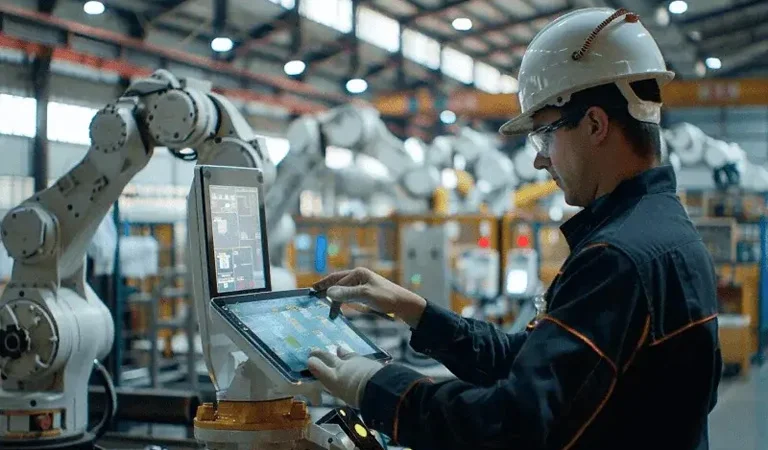
Ever Wonder How Top Manufacturers Are Cutting Safety Incidents by 23% While Boosting Productivity? The secret isn’t working harder; it’s working smarter with AI-powered video analytics. If you’re still relying on traditional surveillance cameras that simply record footage for later review, you’re already behind the curve. The manufacturing and food & beverage industries are experiencing a radical transformation, and AI video analytics is at the heart of it.
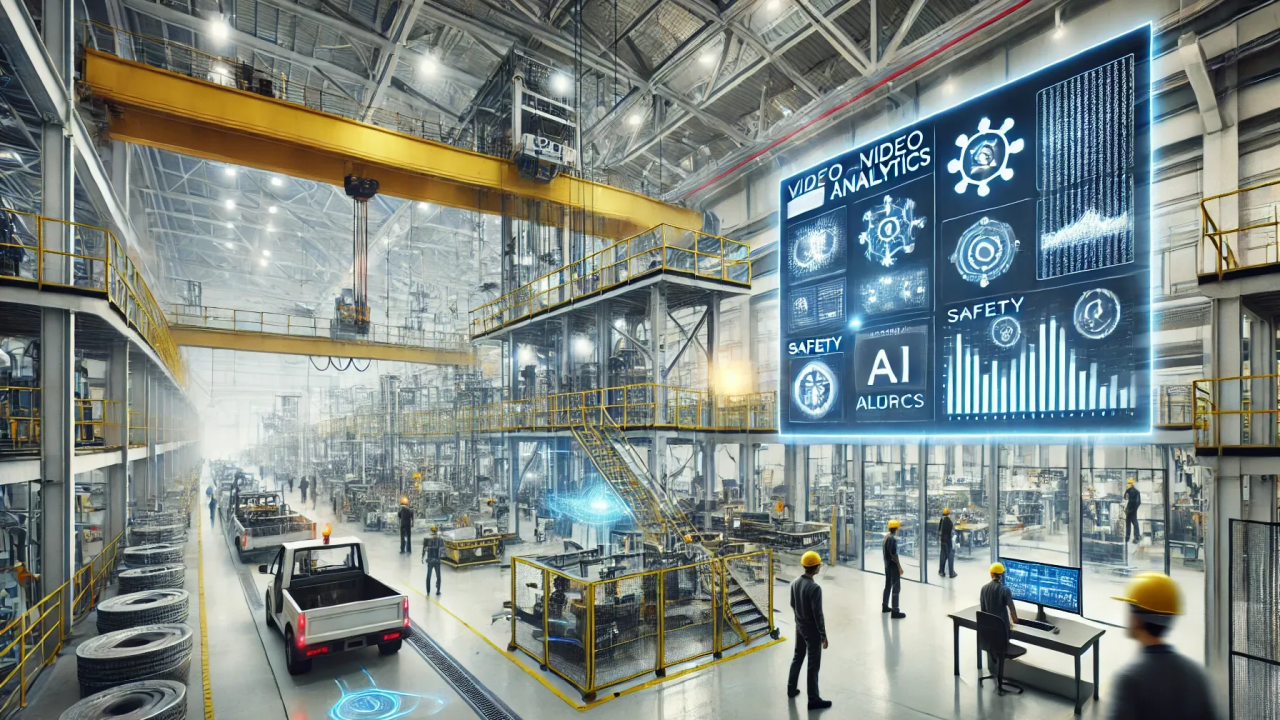
The Market Explosion You Can’t Ignore
Let’s talk numbers. The AI video analytics market is projected to skyrocket from $8.2 billion in 2025 to a staggering $35.1 billion by 2033, growing at a steady 19.8% annually. For manufacturing specifically, 53% of factories are already using AI surveillance to monitor safety, productivity, and compliance.
In the F&B sector alone, AI adoption is expected to reach $67.73 billion by 2030, growing at an impressive 38.3% CAGR. This isn’t just hype; it’s happening right now on factory floors worldwide.
Trend #1: From Reactive to Predictive: The Maintenance Revolution
What’s Changing: Traditional maintenance schedules are out. AI-powered predictive systems are in.
Remember when equipment breakdowns happened at the worst possible time – 2 a.m. on a Saturday? Those days are ending. Modern video AI systems now use IoT sensors combined with visual analytics to predict when machinery needs servicing before it fails.
Real-world impact: Manufacturers using advanced video AI have seen downtime costs drop dramatically. In large plants where every minute of downtime costs approximately $4,000, this translates to savings of $260,000 per hour.
The technology analyzes visual cues, vibrations, unusual movements, and heat signatures alongside sensor data to flag issues before they become catastrophic failures. It’s like having a seasoned maintenance expert watching every piece of equipment 24/7, except this expert never sleeps, never misses a detail, and learns from millions of data points.
Trend #2: Quality Control Gets Superhuman
Traditional quality inspections miss microscopic defects, leading to costly recalls and brand damage. AI-powered computer vision systems now detect defects with accuracy exceeding 95%, driving defect rates below 2% within six months of implementation.
Real Example: BMW’s manufacturing system captures high-resolution images to inspect components for scratches, dents, and misalignments using deep learning algorithms trained on thousands of defect images.
AI vision systems identify contamination, visual defects, and packaging inconsistencies in real-time, analyzing visual, chemical, and even olfactory cues before products leave the production line.
Trend #3: Safety Compliance That Actually Works
- A global packaging plant reduced recordable safety incidents by 23% after implementing AI video analytics
- 68% of enterprises across various industries have adopted video analytics systems
- Real-time PPE detection and mask compliance monitoring are now standard in manufacturing facilities
What This Means for You:
Instead of reviewing hours of footage after an incident, AI systems instantly alert supervisors when someone enters a restricted area without proper PPE, when unsafe behaviors occur, or when prolonged inactivity suggests a worker may need assistance.
The shift from reactive to proactive safety management is saving lives and reducing insurance costs. Companies can now identify near-miss patterns and implement targeted training before serious incidents occur.
Trend #4: Edge Computing Meets Cloud Intelligence
The debate between edge-based and cloud-based solutions is over. The winner? Both.
Why the Hybrid Approach Dominates:
- Edge-based solutions process data locally, providing instant response times crucial for safety alerts and real-time decision-making
- Cloud-based platforms offer centralized monitoring, real-time updates, and integration with IoT devices
Organizations requiring highly customized surveillance solutions, particularly in critical infrastructure and large enterprises, prefer edge-based approaches. Meanwhile, the cloud segment is experiencing the fastest growth due to scalability and lower upfront investment requirements.
Trend #5: Custom Object and Action Detection
The Game-Changer: Modern video analytics like Vidan AI let you define exactly what matters to YOUR operation.
Need to monitor:
- Unauthorized vehicles in restricted zones?
- Critical tools left in dangerous locations?
- Specific behaviors like running in high-risk areas?
- Prolonged inactivity suggests potential incidents?
You can configure AI systems to recognize and alert on these specific scenarios. This customization transforms generic surveillance into intelligent operational support tailored to your unique workflow.
As noted in industry reports, automated optical inspection (AOI) systems are now detecting defects with micron-level precision in semiconductor manufacturing, automotive production, and electronics assembly.
Trend #6: Integration with Existing Infrastructure
Myth: “We’d need to replace all our cameras to use AI video analytics.”
Reality: Most modern AI-powered solutions are camera-agnostic, integrating seamlessly with existing CCTV or IP camera infrastructure.
This changes everything. Instead of facing massive capital expenditure, manufacturers can:
- Leverage current hardware investments
- Add an intelligence layer over existing systems
- Scale gradually as ROI becomes evident
- Avoid operational disruption during implementation
Trend #7: The Asia-Pacific Manufacturing Surge
Geographic Insight:
While North America retained 38.76% of market share in 2024, the Asia Pacific is accelerating at 23.73% CAGR through 2030, driven by large-scale smart city rollouts and expanding manufacturing capabilities.
What’s Driving This:
- China’s City Brain project in Hangzhou analyzes feeds from over 100 intersections, demonstrating how city-wide AI can cut emergency response times nearly in half
- India’s AI sector is forecast to hit $8 billion by 2025, with retail, manufacturing, and healthcare pilots already implementing camera analytics
- Japan focuses automation spending on factory vision systems to offset workforce shortages
What This Means for Your Operation
The convergence of AI, IoT sensors, and cloud computing is creating truly intelligent production environments where video data becomes actionable intelligence. But here’s what matters most: partnership over products.
At Vidan AI, we don’t believe in one-size-fits-all software. Every facility has unique workflows, specific risk profiles, and distinct operational goals. That’s why our approach starts with understanding YOUR environment before implementing solutions.
Whether you need:
- 24/7 monitoring with intelligent alerts
- Custom object detection for critical assets
- PPE compliance tracking
- Behavioral analytics for safety improvement
- Integration with existing systems
The technology exists. The question is: who’s going to help you implement it in a way that actually delivers results?
The Bottom Line
AI video analytics isn’t about replacing human judgment; it’s about augmenting it. It’s about giving your team the visibility and insights they need to act faster, work smarter, and stay safer.
The market is growing exponentially because the technology works. Manufacturers are seeing measurable ROI within 8-12 weeks of deployment, with improvements in overall equipment effectiveness, reduced wastage, and faster decision-making.
Ready to explore what AI video analytics can do for your facility? The trends are clear, the technology is proven, and your competitors are already implementing. The time to move is now.