
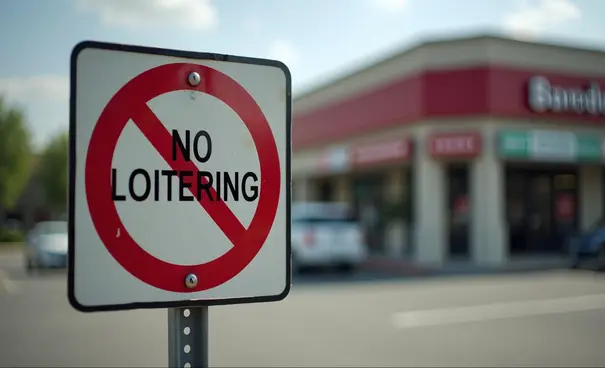
A man stands outside a convenience store for 30 minutes. A group of teenagers sits on a public bench for hours. Are these innocent activities or criminal offenses? The answer depends on context, location, and intent. Over 10 million citations for minor offenses, including loitering, are issued annually in the United States.
Understanding loitering meaning is crucial for property owners, business managers, manufacturing industries and citizens alike, as this seemingly simple act carries significant legal weight and can impact public safety, business operations, and community relations.
What is Loitering: Understanding the Core Concept
What is loitering? At its fundamental level, loitering refers to remaining in a particular public or private space without apparent purpose or authorization. The loitering definition extends beyond simply standing in one place. It encompasses lingering, wandering, or staying in an area when you have no legitimate reason to be there.
The term loiter comes from Middle Dutch, originally meaning “to wobble” or “to be loose.” This etymology reflects the aimless nature often associated with the activity. Today’s definition of loitering has evolved to include specific legal parameters that vary by jurisdiction.
Legal Framework of Loitering Laws
Is loitering against the law? The answer isn’t straightforward. Loitering laws differ significantly across states, cities, and municipalities. Some jurisdictions have strict statutes, while others have repealed or modified their regulations due to constitutional challenges.
Is loitering illegal in your area? This depends on several factors:
- Local ordinances and state statutes
- Specific circumstances of the behavior
- The intent behind the lingering
- Location where the activity occurs
- Time of day and duration
Why is loitering illegal in many places? Lawmakers argue these regulations help maintain public safety, prevent crime, and protect businesses from unwanted interference.
No Loitering: Decoding the Warning
No loitering means a property owner’s or authority’s directive prohibiting people from remaining on premises without a valid purpose. When you see a “no loitering” sign, it serves as a legal notice that unauthorized lingering is prohibited.
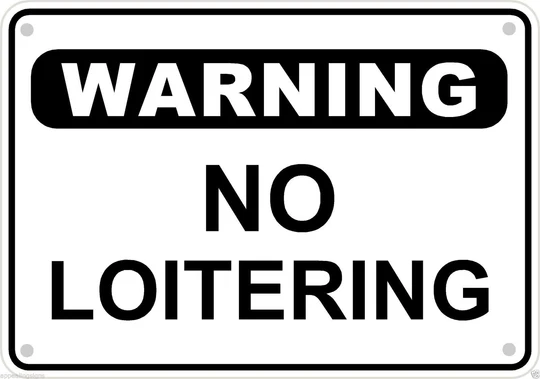
What does no loitering mean in practical terms? It indicates that:
- You cannot remain on the property without conducting business
- Standing around without purpose may result in trespassing charges
- Law enforcement can request that you leave
- Failure to comply may lead to citations or arrest
The meaning of no loitering extends beyond simple preference. These signs establish legal boundaries that give property owners and law enforcement clear authority to address unwanted presence. Modern technology, such as AI-powered surveillance systems, helps businesses enforce these policies effectively. Learn how AI is reshaping manufacturing compliance in various industries, including security and property management.
Loitering and Prowling: The Crucial Distinction
Understanding Loiter Prowl Behavior
Loitering and prowling represent a more serious offense than simple loitering. What is loitering and prowling? This combined charge typically involves:
- Remaining in a place under circumstances suggesting criminal intent
- Acting in a manner that causes alarm or concern for safety
- Being present at unusual hours in suspicious circumstances
- Behaving in ways that suggest planning illegal activity
Loitering/prowling charges require prosecutors to demonstrate more than mere presence. They must show suspicious behavior that would cause reasonable concern in ordinary citizens.
Key Differences Between Simple Loitering and Prowling
| Aspect | Simple Loitering | Loitering/Prowling |
| Intent | Unclear or absent | Suspicious or concerning |
| Behavior | Passive standing | Active suspicious conduct |
| Legal Safety | Misdemeanor | Enhanced misdemeanor or felony |
| Penalities | Fine, warning | Jail time, criminal record |
Legal Implications: What You Need to Know
How Long Is Considered Loitering
How long is considered loitering? Most jurisdictions don’t specify exact durations. Instead, they focus on:
- Lack of apparent lawful purpose
- Behavior at the time present
- Context of the situation
- Reasonable interpretation by law enforcement
Some areas consider 15 minutes without purpose as potential loitering. Others may allow longer periods depending on circumstances.
Define Loitering Law: Constitutional Considerations
Defining the loitering law within constitutional boundaries presents challenges. Many traditional loitering statutes have faced legal challenges on the grounds of:
- Vagueness and lack of clear standards
- Violation of freedom of movement
- Potential for discriminatory enforcement
- First Amendment concerns regarding peaceful assembly
Modern loitering regulations must balance public safety interests with constitutional protections. Courts require these laws to be specific, clear, and narrowly tailored.
Cultural and Linguistic Perspectives
Loitering in Spanish and Global Context
Loitering in Spanish translates to “merodear” or “holgazanear,” though the exact legal meaning varies across Spanish-speaking countries. Understanding these linguistic differences becomes important in diverse communities where language barriers may affect compliance with loitering regulations.
Different cultures view public space occupation differently. What American law might classify as loitering could be normal social behavior in other societies where public gathering spaces serve as community centers.
Prevention Methods for Property Owners
Modern security technology offers sophisticated solutions for managing loitering concerns. Advanced surveillance systems can detect and alert property managers to prolonged unauthorized presence.
Effective Deterrence Strategies
Physical Measures:
- Adequate lighting in all areas
- Clear signage indicating private property
- Strategic landscaping that discourages lingering
- Limited seating or congregation areas
Technological Solutions: Property managers increasingly rely on intelligent video analytics to identify loitering behavior. These systems can distinguish between customers and individuals without legitimate business. Choosing the right PTZ camera for your security needs becomes essential when implementing comprehensive loitering prevention strategies.
Policy-Based Approaches: Establishing clear rules for property use helps prevent loitering issues. Regular patrols, whether by security personnel or law enforcement, reinforce these policies. Training staff to recognize and appropriately address potential loitering situations ensures consistent enforcement.
The Role of Community Engagement
Effective loitering prevention extends beyond enforcement. Creating welcoming spaces for legitimate users while discouraging problematic behavior requires community involvement. Business districts that engage with residents, provide appropriate public amenities, and maintain attractive environments typically experience fewer loitering issues.
Vidan AI: Smart Solutions for Security Challenges
Vidan AI revolutionizes how businesses and property managers address loitering concerns. Our advanced artificial intelligence video analytics provides real-time detection and analysis of suspicious behavior patterns. It learns normal activity patterns for your property and alerts you to anomalies that may indicate loitering or other security concerns.
Unlike traditional surveillance that requires constant human monitoring, Vidan AI operates 24/7 with intelligent algorithms that reduce false alarms while ensuring genuine threats receive immediate attention. Food and beverage industry leaders report a 67% reduction in loitering incidents after implementing our smart security solutions.
Understanding Your Rights and Responsibilities
Whether you’re a retailer, property owner, business manager, or citizen, knowing your rights regarding loitering is essential. Property owners have the right to control who remains on their premises. They can ask individuals to leave and contact law enforcement if necessary.
The importance of police relations with the community for enhanced safety cannot overlook the fact that citizens have rights, too. You cannot be arrested simply for being in a public place. What’s loitering from a legal standpoint requires more than mere presence. Law enforcement must demonstrate you were there without a lawful purpose and often must show you refused to leave when asked.
When Loitering Charges May Be Challenged
Courts have overturned loitering convictions based on:
- Insufficient evidence of criminal intent
- Overly vague statutes
- Lack of clear warnings before arrest
- Discriminatory enforcement patterns
- Legitimate reasons for presence
Conclusion
Understanding loitering meaning empowers property owners, business operators, and citizens to navigate complex legal landscapes while respecting everyone’s rights. The distinction between innocent presence and unlawful loitering often depends on context, intent, and specific local regulations. Modern technology offers unprecedented tools for managing these challenges effectively.
Ready to transform your property security with intelligent loitering detection? Vidan AI delivers cutting-edge solutions that protect your assets while respecting individual rights. Contact us today for a free consultation and discover how artificial intelligence can revolutionize your security strategy.