
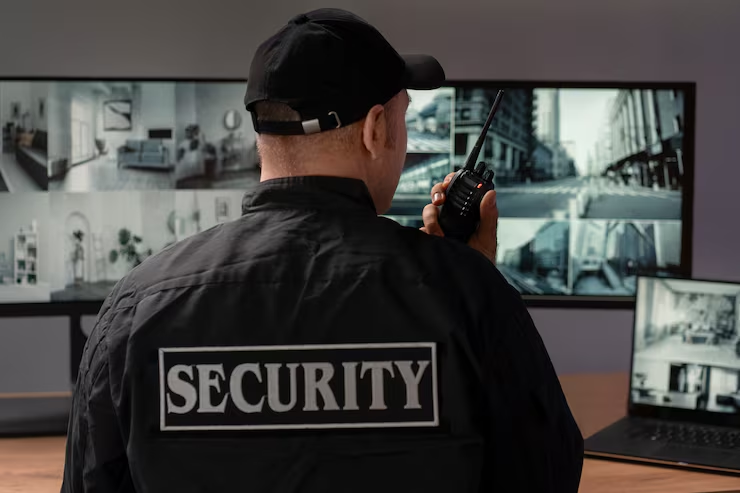
Every business owner faces a critical decision: how to protect their assets, employees, and customers from potential threats. A security personnel’s duties and responsibilities encompass far more than standing at a doorway. These professionals serve as the first line of defense against theft, violence, and emergencies while creating safe environments where businesses thrive.
The demand for skilled security personnel continues to grow across industries. From retail stores to corporate offices, hospitals to construction sites, trained guards provide essential protection that technology alone cannot deliver.
What Makes a Professional Guard
The meaning of a security guard extends far beyond basic monitoring. These professionals blend physical presence with sharp observation skills, crisis management abilities, and strong communication talents.
Modern guards must adapt to rapidly changing environments. They handle everything from routine patrols to emergency response, often making split-second decisions that protect lives and property.
The Foundation of Protection Work
A security guard serves multiple functions simultaneously. They deter criminal activity through visible presence while maintaining detailed logs of incidents and activities. Their role combines preventive measures with reactive responses when situations demand intervention.
Guards create psychological barriers against potential threats. According to the U.S. Department of Justice, facilities with active security measures experience up to 20% fewer incidents of theft and vandalism.
Core Responsibilities That Define the Position
Security guard duties vary significantly based on location and industry. However, certain fundamental tasks remain consistent across all positions.
Daily Patrol and Monitoring Operations
Guards conduct regular inspections of assigned areas. They check doors, windows, and access points to ensure proper security. These systematic patrols prevent unauthorized entry and identify potential vulnerabilities before they become problems.
Effective monitoring requires attention to detail. Guards must notice unusual behavior, unfamiliar faces, and out-of-place objects that others might overlook.
Access Control and Visitor Management
Controlling who enters and exits facilities forms a critical security personnel’s duties and responsibilities. Guards verify identifications, issue visitor badges, and maintain accurate logs of everyone who passes through secured areas.
This gatekeeping function protects sensitive areas from unauthorized access. It also provides crucial documentation for investigations if incidents occur.
Emergency Response and Crisis Management
When emergencies strike, guards often serve as first responders. The duties of security guard professionals include administering first aid, evacuating buildings during fires, and coordinating with police or fire departments.
Quick thinking during crises can save lives. Guards receive training in emergency protocols, enabling them to act decisively when seconds matter most.
Specialized Skills That Separate Professionals from Amateurs
What does a security guard do to excel in their role? They master both hard and soft skills that enable effective protection.
Observation and Threat Assessment
Professional guards develop enhanced situational awareness. They scan environments constantly, identifying potential threats before they escalate. This vigilance requires sustained concentration and the ability to process multiple information streams simultaneously.
Pattern recognition helps guards spot suspicious behavior. They learn to distinguish between normal activity and potential security concerns through experience and training.
Communication and Conflict Resolution
Duties of a security guard include de-escalating tense situations without physical confrontation. Verbal communication skills often prevent minor disputes from becoming major incidents.
Guards must communicate clearly with diverse audiences. They interact with executives, employees, visitors, and law enforcement, adapting their approach to each situation.
Modern security operations increasingly integrate advanced surveillance technology. Guards monitor CCTV systems, access control software, and alarm systems from centralized command centers.
For remote locations, mobile security cameras are a flexible solution for remote monitoring, providing coverage without permanent infrastructure.
Crafting Your Professional Security Presence
A strong security guard resume highlights relevant experience, certifications, and achievements that demonstrate capability.
Essential Components for Job Applications
Successful resumes emphasize specific accomplishments rather than generic duties. Quantifiable results like “reduced theft incidents by 40%” or “maintained zero security breaches over 18 months” demonstrate real value.
Description of security guard duties should focus on responsibilities that match the target position. Tailoring applications to specific job requirements increases interview opportunities significantly.
Certifications That Boost Marketability
Industry certifications validate professional competence. Many states require specific licenses for security work. Additional certifications in CPR, first aid, and specialized security systems enhance employment prospects.
Continuing education demonstrates commitment to professional growth. Guards who pursue advanced training often qualify for supervisory roles and higher compensation.
Industry-Specific Applications of Security Services
What is security guard work? How does it look different across various sectors? Each industry presents unique challenges requiring specialized approaches.
Retail and Loss Prevention
Retail security guards focus heavily on theft prevention and customer safety. They monitor shoppers, check receipts, and respond to shoplifting incidents while maintaining a welcoming environment.
These guards balance security concerns with customer service. Their presence should deter crime without making legitimate shoppers feel uncomfortable.
Food & Beverage Facility Security
Food and beverage plants face high-pressure situations that can disrupt operations if not handled correctly. Security teams monitor restricted production zones, address disputes among staff or suppliers, and prevent unauthorized access that could affect product safety.
These environments call for steady judgment and clear policy enforcement. Guards must maintain order while respecting the fast-paced, high-stress nature of manufacturing areas where safety, hygiene, and smooth workflow are crucial.
Corporate and Office Security
Officer security jobs in corporate settings emphasize access control and executive protection. Guards manage employee badge systems, visitor screening, and after-hours building security.
These positions often require higher levels of professionalism and discretion. Guards may handle confidential information or interact regularly with senior management.
The Evolution of Residential Security Services
Building security has transformed dramatically in recent years. Rover security concepts, where guards patrol multiple properties rather than remaining stationary, increase coverage efficiency. For comprehensive building protection, Apartment security explores emerging trends reshaping residential security.
Multi-family housing security requires community-focused approaches. Guards become familiar faces whom residents trust, creating safer neighborhoods through consistent presence and engagement.
Night Operations and Enhanced Surveillance
Overnight shifts present distinct challenges requiring specialized skills. What security does during night hours extends beyond basic monitoring.
Guards must remain alert during times when human vigilance naturally decreases. Night work often involves a higher risk since criminals prefer operating under darkness. Advanced technology, like how night vision cameras work, supplements human observation during low-light conditions.
Managing Fatigue and Maintaining Alertness
Professional guards employ strategies to combat fatigue during overnight shifts. Regular movement, proper lighting, and systematic patrol patterns help maintain focus throughout long nights.
Basis guard protocols emphasize the importance of rest between shifts. Well-rested guards perform significantly better than those working excessive hours.
Transforming Security Through Intelligence with Vidan AI
Modern security operations benefit tremendously from artificial intelligence integration. Vidan AI represents the next evolution in protection technology, enhancing human capabilities rather than replacing them.
Security guard professionals using AI-powered systems can monitor larger areas more effectively. Vidan AI analyzes video feeds in real-time, identifying unusual activities and alerting guards to potential threats immediately.
It learns normal patterns for specific locations. When deviations occur, like unauthorized access attempts or suspicious loitering, Vidan AI notifies guards instantly. This allows security personnel to focus attention where it’s needed most, rather than watching dozens of screens simultaneously.
The technology excels at tasks humans find challenging, like tracking individuals across multiple cameras or detecting subtle changes in normal activity patterns. This partnership between human judgment and machine precision creates security systems more effective than either could achieve alone.
Building a Career in Professional Security
Security guard job duties offer entry points into broader security and law enforcement careers. Many professionals start as guards before advancing to supervisory roles, investigations, or specialized protection services.
Career progression often follows clear paths. Entry-level guards gain experience, pursue certifications, and gradually take on more responsibility. Senior positions may involve training new guards, managing teams, or overseeing security operations for entire facilities.
The skills developed in security work transfer to numerous other fields. Risk assessment, crisis management, and situational awareness benefit careers in emergency services, corporate investigations, and facility management.
Compensation and Benefits
The job description of a security officer typically offers steady employment with opportunities for overtime. While entry-level positions may start at modest wages, experienced guards in specialized settings earn competitive salaries.
Many security positions include benefits like health insurance, retirement plans, and paid time off. Unionized positions often provide stronger benefit packages and job protections.
The Human Element in an Automated World
Despite technological advances, what a security guard provides cannot be fully automated. Human judgment, empathy, and adaptability remain irreplaceable in security work.
Guards make nuanced decisions that algorithms struggle with. They can assess whether someone behaving unusually poses a genuine threat or simply needs assistance. This contextual understanding prevents both security gaps and unnecessary confrontations.
The physical presence of guards also provides psychological comfort. People feel safer knowing trained professionals are nearby and ready to help during emergencies.
Your Next Step in Professional Protection
The security industry offers numerous opportunities for motivated professionals. What does a security guard do to advance their career? They pursue continuous learning, seek challenging assignments, and develop specialized skills that increase their value.
Ready to revolutionize your security operations? Discover how Vidan AI can transform your protection capabilities while supporting your security team’s success. Visit our website today to schedule a demo and see the future of intelligent security in action.