
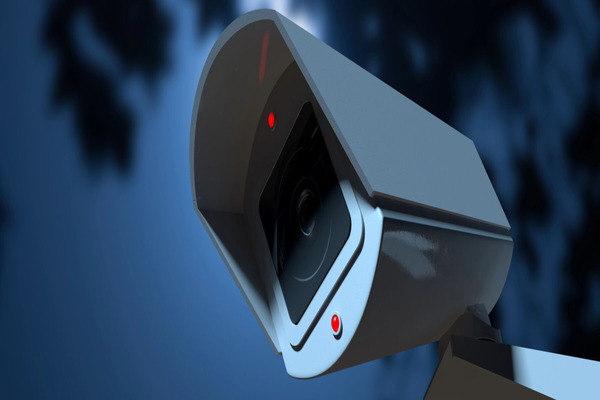
Have you ever wondered why your security camera captures crystal-clear footage of a raccoon raiding your trash at 2 AM, or how wildlife documentaries show animals hunting in what should be pitch-black darkness?
Night vision cameras have transformed from military-grade equipment to everyday consumer technology in just a few decades. The technology that lets cameras “see” when humans can’t has evolved significantly. It has transitioned from being exclusive military equipment that cost tens of thousands of dollars to becoming a standard feature in $40 doorbell cameras.

Whether you’re a tech enthusiast or a homeowner seeking to enhance your security, join us as we explore how a night-time vision camera works and why is night-vision popular on cameras.
What You’ll Discover in This Guide
- The two competing technologies behind night vision cameras and why one dominates consumer markets
- How infrared night vision creates images using “invisible flashlights.”
- The critical difference between infrared vs night vision approaches
- Why is night vision popular on cameras across every industry, from home security to smartphones
- Real-world applications of IR night vision technology
- How to choose the right infrared illuminator for night vision for your needs
- The future of night time vision camera technology
What Makes Night Vision Possible?
Night vision is achieved through the eye’s adaptation to low light and technology that amplifies existing light or utilizes infrared imaging.
Let’s start with something that sounds like science fiction but is absolutely real: right now, your TV remote is shooting out light beams you can’t see. Your smartphone sensors are detecting radiation invisible to your eyes. And most night sight cameras are flooding their surroundings with illumination that only they can perceive.
This invisible light is called infrared radiation, and it exists just beyond the red end of the visible spectrum. While humans evolved to see wavelengths between 400-700 nanometers (the colors of the rainbow), infrared light for night vision operates between 700-1000 nanometers. It’s not that this light doesn’t exist; we just don’t have the biological hardware to detect it.
But cameras? They see it perfectly.
Why Your Eyes Fail When Cameras Succeed
Human vision requires photons, particles of light, to strike photoreceptor cells in our retinas. In bright sunlight, trillions of photons flood our environment. At night, that number drops dramatically. By the time you’re sitting in what feels like complete darkness, there simply aren’t enough photons for your eyes to build a coherent image.
This is the fundamental problem that night vision camera attempts to solve. Unlike our fixed biology, camera technology can be engineered to work around these limitations in two radically different ways.
Two Paths to Night Vision: Understanding the Technology Split
Method One: Image Intensification (The Military Approach)
Walk into any military surplus store, and you’ll see those iconic green-glowing night vision goggles. These use image intensification, a technology that takes the tiny amount of ambient light available (moonlight, starlight, distant city glow) and amplifies it by 20,000 times or more.
But how does a night vision camera work? Here’s the method:
Step 1: A photocathode converts incoming photons into electrons
Step 2: These electrons get accelerated through a microchannel plate, multiplying thousands of times
Step 3: The electron cascade strikes a phosphor screen
Step 4: The phosphor glows green (green is easier for human eyes to look at for extended periods)
This technology is passive; it doesn’t emit any light itself. That makes it perfect for covert military operations where you don’t want to give away your position. But it has drawbacks: it’s expensive (thousands to tens of thousands of dollars), requires some ambient light to work, and produces that distinctive green monochrome image.
For consumer applications? It’s overkill and overpriced.
Method Two: Infrared Illumination (The Consumer Revolution)
This is where IR night vision dominates. Instead of amplifying existing light, these cameras create their own illumination using infrared lights for night vision. It’s essentially the same concept as using a flashlight, except the flashlight emits wavelengths invisible to human eyes but perfectly visible to camera sensors.
Here’s the brilliant simplicity of how infrared cameras work:
- Infrared LEDs (your invisible flashlight) flood the scene with IR light
- This light bounces off objects just like visible light does
- Your camera sensor captures the reflected IR radiation
- Image processing converts this into a visible black-and-white image you can see on your screen
The entire setup can cost under $50 to manufacture, requires no ambient light whatsoever, and produces clear, detailed images. This is why nearly every consumer NV camera, from baby monitors to security systems, uses this approach.
Inside an Infrared Night Vision Camera: Component by Component
Let’s crack open a typical security camera and see what makes infrared night vision cameras tick.
The IR Cut Filter: Day/Night Mode Switcher
During daylight, camera sensors face a problem: they’re naturally sensitive to infrared light, which creates color distortion and hazy images. The solution? A mechanical IR-cut filter, literally a small piece of coated glass that blocks infrared wavelengths.
When your night sight camera detects low light levels (usually via a light sensor), you’ll sometimes hear a faint “click.” That’s the IR-cut filter physically moving out of the way, allowing infrared light to reach the sensor. In the morning, click, it moves back into position.
Some newer cameras use electronic filtering instead, but the principle remains the same: block IR during the day, allow it at night.
The Infrared Illuminator: Your Invisible Spotlight
Look closely at any night time vision camera, and you’ll see a ring of small LED bulbs surrounding the lens. These are your infrared illuminators for night vision. They typically operate at one of two wavelengths:
850nm Infrared: Slightly visible as a faint red glow if you look directly at the camera. More efficient, longer range, commonly used in security cameras. You might notice this faint red dot on your TV remote or security camera at night.
940nm Infrared: Completely invisible, even if you stare directly at it. Shorter range, used in covert surveillance or applications where you don’t want subjects to know they’re being filmed (like wildlife cameras).
The power of these LEDs determines your camera’s night vision range. A typical home security camera might have IR illumination effective to 30-50 feet. Professional systems can push this to 300+ feet using more powerful infrared illuminators.
The Image Sensor: Silicon That Sees in the Dark
Modern infrared night vision cameras use either CMOS or CCD sensors. These silicon chips contain millions of photosensitive pixels that generate electrical charges when struck by photons, including infrared photons.
Here’s something fascinating: camera sensors are actually TOO sensitive to infrared. That’s why the IR-cut filter is necessary during the day. Engineers had to add components to BLOCK infrared sensitivity, rather than add it. Your camera is naturally better at IR photography at night than it is at normal daytime photography.
The Image Processor: Making the Invisible Visible
Raw infrared sensor data looks nothing like the crisp black-and-white night vision footage you see. Modern cameras use sophisticated digital signal processors to:
- Adjust gain and exposure for optimal brightness
- Apply noise reduction (IR images can be grainy)
- Enhance contrast and sharpness
- Compensate for IR “hot spots” (over-illuminated areas close to the camera)
- Convert the monochrome IR data into a viewable video format
This processing happens in real-time, often 30-60 times per second, to create smooth video.
Infrared vs Night Vision: Settling the Confusion Once and For All
Walk into any electronics store, and you’ll see terms used interchangeably: “night vision camera,” “infrared night vision camera,” “IR night vision,” “infrared camcorder.” What’s the actual difference?
Here’s the truth: infrared night vision IS a type of night vision. The confusion comes from military versus consumer terminology.
| Technology Type | Light Source | Image Color | Common Uses |
| Image Intensification (Traditional “Night Vision”) | Amplifies ambient light | Green monochrome | Military, law enforcement, aviation |
| Infrared Illumination (IR Night Vision) | Active IR LEDs | Black & white | Security cameras, baby monitors, wildlife cameras |
| Thermal Imaging (Often called “Infrared”) | Detects heat radiation | False color (reds/whites = hot) | Search & rescue, building inspection, hunting |
| Low-Light Color (Starlight Cameras) | Amplifies visible light with a color sensor | Full color | High-end security, professional video |
When most people ask “infrared vs night vision,” they’re actually comparing infrared illumination against image intensification. For consumer applications, IR night vision wins on cost, simplicity, and performance in zero-light conditions.
Why Is Night Vision Popular on Cameras?

Ten years ago, night vision cameras were niche products. Today, they’re everywhere. Here’s why the technology exploded.
-
The Smart Home Security Boom
Market research indicates that the Global Video Surveillance Market will grow to US$198.89 billion by 2032, increasing from US$69.80 billion in 2023. This represents a CAGR of 12.34% from 2024 to 2032, with residential security identified as the fastest-growing segment. And here’s the key statistic: over 60% of property crimes occur between 6 PM and 6 AM.

Without IR night vision, security cameras would be useless for 12+ hours daily. The technology transformed home security from a luxury to an expectation. Your $100 doorbell camera now provides 24/7 monitoring that would have required a $10,000 professional system just 15 years ago.
-
The Baby Monitor Evolution
Modern parents refuse to choose between checking on sleeping infants and waking them with lights. Night sight cameras solved this completely. You can now watch your baby sleep in complete darkness from your smartphone, with image quality clear enough to see breathing movements.

This single application probably did more to normalize night time vision camera technology than anything else, introducing millions of families to infrared imaging.
-
Automotive Safety Systems
High-end vehicles now include infrared night vision cameras that detect pedestrians, cyclists, and animals beyond headlight range. These systems can alert drivers to hazards and even trigger automatic braking.
Mercedes-Benz, BMW, and other luxury manufacturers offer night vision systems that display a thermal or infrared view on the dashboard, literally showing you what’s invisible to the naked eye. This technology is gradually filtering down to mid-range vehicles.
-
Plummeting Costs
Perhaps the biggest reason why night vision is popular on cameras: the technology has become incredibly cheap. LEDs that emit infrared light for night vision cost pennies. Image sensors with IR sensitivity are standard. The processing power needed is minimal by modern standards.
What cost $5,000 in 2005 costs $50 today, a 100x price reduction in less than two decades.
Choosing Your Night Vision Technology
For Home Security: Balancing Range and Resolution
Camera Resolution Matters
- 1080p minimum for identifying faces at 15-20 feet
- 4K for reading license plates or capturing fine details
- Higher resolution requires more IR illumination
IR Range Considerations
- Measure the furthest distance you need to monitor
- Add 20-30% buffer (IR specs are often optimistic)
- Multiple cameras with overlapping coverage beat one super-powerful camera
Avoid IR Reflection Problems
- Mounting IR cameras behind windows causes a whiteout (IR reflects off glass)
- Position cameras where the infrared illuminator has a clear line of sight
- Use external infrared lights for night vision for large areas
For Wildlife Observation: Stealth vs. Performance
No-Glow vs. Standard IR
- 940nm invisible IR for skittish or rare animals
- 850nm standard IR for better range and image quality
- Test your target species’ sensitivity before committing
Trigger Speed and Recovery
- Wildlife moves fast; look for < 0.5-second trigger speeds
- Recovery time between shots matters for multiple animals
For Professional Video: Understanding Limitations
Color vs. Monochrome
- IR photography at night is always monochrome
- Some cameras claim “color night vision,” which requires ambient light, not true IR
- Plan lighting accordingly for video projects
External Lighting Control
- Professional infrared camcorder work often uses infrared light bulbs for night vision
- These provide more power and directional control than camera-mounted LEDs
- Studio-style infrared illuminators allow creative lighting techniques
Vidan AI: Intelligence That Sees Beyond the Darkness
Capturing night footage is one thing. Making sense of hours of infrared night vision camera recordings is another challenge entirely. That’s where Vidan AI transforms the game.
Vidan AI’s computer vision technology is specifically optimized for IR night vision footage. Unlike generic video analysis tools that struggle with monochrome, lower-contrast nighttime imagery, VIdan AI’s algorithms are trained on thousands of hours of night time vision camera recordings.
What VIdan AI Does With Your Night Vision Footage:
✓ Intelligent Event Detection: Automatically identifies relevant activity in hours of footage, flagging when people, vehicles, or animals appear
✓ Object Recognition: Distinguishes between different types of subjects even in low-quality NV camera recordings
✓ Timeline Creation: Generates searchable timelines so you can jump to specific events instead of scrubbing through endless video
✓ Alert Configuration: Set rules for what matters (humans entering restricted zones, vehicles approaching, specific times of activity)
Whether you’re securing a business, analyzing wildlife patterns, or managing multi-property surveillance, Vidan AI turns passive infrared night vision camera systems into active intelligence platforms.
In Conclusion
The journey from exclusive military technology to ubiquitous consumer features reveals how quickly innovation can democratize. Understanding how night vision cameras work through infrared illumination shows us that sometimes the best solutions don’t require amplifying what’s barely there. They create what’s needed using wavelengths we never knew surrounded us.
Ready to transform your night vision footage from endless recordings into actionable intelligence? Vidan AI brings artificial intelligence to your infrared cameras, automatically detecting events, recognizing patterns, and alerting you to what matters.
Start your free Vidan AI trial today and see what your cameras have been missing.