
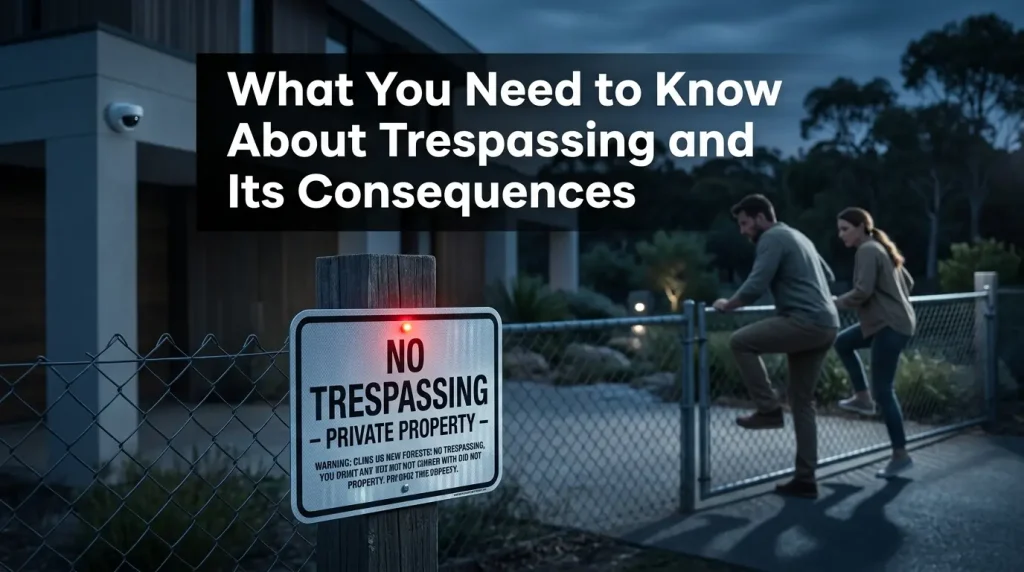
Someone is on your property right now. Do you know?
Every 26 seconds, a property crime occurs in the United States. Most start the same way: someone crosses a boundary they were never supposed to cross. Trespassing stores, warehouses, construction sites, and private facilities costs businesses millions annually. Yet many property owners only discover a breach after the damage is done.
This is not just a legal issue. It is a security failure.
What This Blog Covers
- What trespassing legally means and its types
- Real consequences for businesses and property owners
- How unauthorized access escalates into bigger crimes
- Where AI-powered surveillance changes everything
- How Vidan AI helps you stay ahead of threats
Trespassing Is Not Always a Stranger in a Hoodie
The Many Faces of Unauthorized Entry
Most people picture trespassing as someone jumping a fence at night. The reality is far more nuanced.
Trespassing occurs when a person enters or remains on property without permission. It covers:
- Criminal trespass involves intent to cause harm, damage, or commit a crime. Courts treat this seriously.
- Civil trespass involves entry without criminal intent but still causes damage. Property owners can pursue legal action.
- Accidental trespass happens when boundaries are unclear. Still legally actionable in many jurisdictions.
- Trespassing stores includes shoplifters loitering after hours, former employees re-entering restricted zones, and vendors accessing unauthorized areas.
The line between “just walking around” and criminal trespass is thinner than most realize.
The Legal Consequences Nobody Talks About Enough
What Trespassers Face
The consequences of trespassing depend on jurisdiction, intent, and property type. Here is what the law typically enforces:
- Misdemeanor charges apply to first-time offenders with no criminal intent. Fines range from $500 to $2,000. Jail time can reach one year.
- Felony charges apply when trespass involves weapons, threats, or repeated offenses. Prison sentences can exceed five years.
- Civil liability means the trespasser may owe damages for any harm caused to the property.
- Restraining orders can be filed against repeat trespassers. Violation of these orders carries additional penalties.
For businesses dealing with trespassing stores situations specifically, local ordinances often allow for enhanced penalties when retail or commercial property is involved.
How Trespassing Escalates Into Bigger Threats
Trespassing rarely stays just trespassing. Security data shows a clear pattern:
A person who trespasses once often returns. Repeated access leads to theft, vandalism, and sometimes violent crime. Construction sites are especially vulnerable. Unauthorized access to active job sites leads to equipment theft, liability injuries, and project delays.
Retail environments face a different challenge. Former employees who retain access credentials. Vendors who overstay their welcome. Customers who re-enter restricted stock areas. These are not hypothetical. They happen daily.
Your Property Rights and How to Enforce Them
What Property Owners Can and Cannot Do
Property owners have strong legal rights. But enforcement has limits.
- You CAN: Post visible “No Trespassing” signs. These strengthen your legal position enormously.
Deny entry to anyone without cause in most commercial jurisdictions.
Call law enforcement immediately when unauthorized entry is detected.
Use video surveillance as legal evidence of trespass.
- You CANNOT: Use physical force beyond what your jurisdiction defines as reasonable.
Set traps or hazards intended to injure trespassers. This creates serious liability.
Detain a trespasser unlawfully. Leave that to law enforcement.
Understanding your rights protects you legally when you act against trespassers.
The Hidden Costs Businesses Never Calculate
Trespassing Drains More Than You Think
The financial damage from unauthorized access extends far beyond stolen goods.
Direct costs include stolen inventory, damaged equipment, and broken access points.
Indirect costs include increased insurance premiums, legal fees, and staff hours spent on incident reporting.
Operational disruption means delayed openings, halted production, and temporary closures.
A single trespass incident at a laundry facility, for example, can compromise both equipment and customer trust. It closes gaps that traditional security misses entirely.
The cost of prevention is always lower than the cost of the incident.
Why Locks and Guards Are Not Enough Anymore
Traditional security relies on physical presence and reactive response. Someone breaks in. An alarm goes off. A guard responds. By then, the damage is done.
Modern properties need proactive intelligence.
Automotive dealerships learned this the hard way. Vehicles are moved, test drives go unmonitored, and after-hours access goes unchecked. Automotive Dealership Security Solutions built around AI video intelligence catch threats before they escalate, rather than after.
The gap between detecting a threat and responding to it is where crime happens. Closing that gap requires technology, not just manpower.
How AI Surveillance Transforms Trespass Prevention
The Technology That Watches So You Do Not Have To
Modern AI-powered cameras do not just record. They analyze.
AI Video Analytics can detect a person loitering near a restricted perimeter before they attempt entry. It can flag unusual movement patterns at 2 AM. It can send instant alerts to your security team without a human watching a screen 24 hours a day.
Key capabilities include:
Perimeter detection identifies when a boundary is crossed and triggers an alert in real time.
Behavioral analysis distinguishes normal activity from suspicious patterns.
License plate recognition tracks vehicles entering unauthorized areas.
Low-light detection catches threats even in dark conditions how Night Vision Cameras Work explains why modern infrared technology is a game-changer for after-hours security.
Vidan AI: Built for Properties That Cannot Afford Gaps
Vidan AI does not sell you a camera and walk away. We engineer complete security ecosystems for commercial properties.
Our platform combines:
- Real-time AI detection that identifies threats the moment they emerge.
- Multi-site management gives security teams visibility across every location from one dashboard.
- Smart alert systems that reduce false alarms and prioritize genuine threats.
- Evidence-grade video that stands up in legal proceedings against trespassers.
When trespassing stores or any commercial property is involved, the quality of your evidence determines the strength of your legal case. Grainy footage from outdated cameras does not win in court. Vidan AI footage does.
Our clients range from retail chains to industrial warehouses to automotive dealerships. Every deployment is tailored. Every system is built to protect what matters most to your operation.
We do not monitor properties after incidents. We prevent incidents from happening.
Final Thoughts
Trespassing is predictable. Trespassers follow patterns. They test weak points. They return to where they succeeded before. They escalate when unchallenged. The businesses that stop trespassing store incidents before they become crimes share one trait. They invested in intelligent surveillance before they needed it. Waiting for the first incident to upgrade your security is the most expensive decision a property owner makes.
Vidan AI exists because reactive security is not security at all. It is documentation of failure. Your property. Your assets. Your people. They deserve a system that thinks ahead.
Ready to eliminate trespass vulnerabilities from your property? Request a Vidan AI demo today for a free security assessment. Discover exactly where your gaps are before someone else does.