
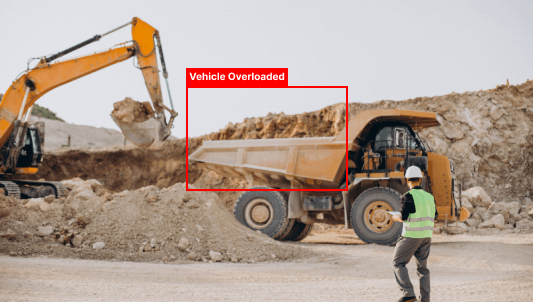
Construction sites lose $2.8 billion annually to equipment-related accidents. Workers face constant danger from blind spots, operator fatigue, and unpredictable machinery movements. Traditional safety measures often fail because they rely solely on human vigilance.
Heavy equipment safety transforms when artificial intelligence is introduced. Predictive video analytics now detect hazards before accidents occur. This technology saves lives, reduces insurance costs, and keeps projects on schedule.
Why Traditional Safety Methods Fall Short
Construction managers know the problem too well. Static cameras record incidents but don’t prevent them. Safety officers can’t monitor every corner simultaneously. Human error remains the leading cause of equipment accidents.
Standard safety protocols include:
- Daily equipment inspections that miss hidden defects
- Mandatory training sessions workers forget under pressure
- Warning signs that become invisible through familiarity
- Manual monitoring that fails during critical moments
The gap between regulation and reality costs companies millions. Equipment downtime after accidents disrupts entire project timelines. Insurance premiums skyrocket after each incident report.
How Predictive Video Analytics Works
Heavy equipment safety reaches new heights through machine learning algorithms. Cameras equipped with AI processors analyze movement patterns constantly. The system learns normal operations and flags anomalies instantly.
The technology identifies specific risk factors:
- Workers entering equipment blind spots without proper clearance
- Operators showing signs of fatigue through irregular movements
- Machinery operating outside safe parameter ranges
- Unauthorized personnel approaching restricted zones
Smart algorithms process thousands of data points per second. This speed enables real-time alerts before accidents materialize. Also, flexible for remote site monitoring.
Three-Layer Detection System
Perimeter Monitoring
AI tracks all movement within designated safety zones. The system creates virtual boundaries around active equipment. Alerts trigger when workers cross these invisible lines without authorization.
Behavioral Analysis
Machine learning recognizes unsafe patterns in operator behavior. Sudden jerky movements indicate potential equipment malfunction. Unusual delays suggest operator distraction or medical issues.
Predictive Modeling
Historical data reveals accident patterns specific to each site. The system predicts high-risk scenarios based on weather, time, and workload. Supervisors receive advance warnings during peak danger periods.
Cost-Benefit Analysis for Implementation
Initial investment ranges from $15,000 to $45,000 per site. Monthly monitoring services add $500 to $1,200, depending on coverage. However, returns manifest quickly through multiple channels.
Financial Benefits:
Immediate Savings: Insurance premiums decrease 25-40% with documented safety improvements. Workers’ compensation claims drop significantly with fewer incidents. Equipment maintains higher resale value without accident damage.
Long-Term Returns: Project timelines remain on schedule, with no accident-related delays. Regulatory compliance substantially reduces OSHA fine risk. Employee retention improves in demonstrably safer work environments.
ROI typically occurs within 18-24 months of deployment. Companies report break-even points even faster on high-risk sites. The technology pays for itself through accident prevention alone.
Integration with Existing Systems
Modern predictive analytics work alongside current safety infrastructure. Existing camera networks are being upgraded with AI-enabled processing units. No complete system replacement becomes necessary for most sites.
The integration process follows these steps:
Step 1: Assess current camera coverage and identify blind spots requiring additional units. Evaluate network bandwidth to ensure sufficient data transmission capacity.
Step 2: Install AI processing hardware at strategic monitoring locations throughout the facility. Configure system parameters based on specific equipment types and site layout.
Step 3: Train the algorithm using 30-60 days of normal operational footage. Fine-tune sensitivity settings to minimize false alerts while maintaining vigilance.
Step 4: Deploy full monitoring with graduated alert protocols for different threat levels. Establish response procedures for each alert category and train personnel.
Step 5: Review system performance monthly and adjust parameters based on incident reports. Update algorithms as new equipment or processes get introduced.
Many systems incorporate night vision cameras for 24/7 protection. This ensures continuous monitoring during night shifts and low-light conditions.
Leading the Safety Revolution with Vidan AI
Vidan AI specializes in predictive analytics designed specifically for industrial environments. The system learns your site’s unique operational patterns.
Vidan AI’s algorithms are trained on millions of hours of construction site footage. This extensive database enables accurate threat detection from day one. False alert rates remain below 3%, compared with industry averages of nearly 15%.
The platform offers customizable alert hierarchies for different stakeholders. Site supervisors receive immediate notifications for critical threats. Management gets daily safety reports with trend analysis and recommendations.
Cloud-based processing eliminates the need for expensive on-site server infrastructure. Remote monitoring allows safety officers to oversee multiple locations simultaneously. Mobile apps provide real-time alerts wherever managers travel.
Scalability for Growing Operations
Single-site deployments expand easily to enterprise-wide networks without compatibility issues. Centralized dashboards provide unified visibility across all locations and equipment types. Analytics reveal organization-wide patterns invisible at individual site levels.
Overcoming Implementation Challenges
Workers sometimes resist new surveillance technology initially. Transparent communication about safety benefits reduces anxiety significantly. Emphasize that systems protect employees rather than punish them.
Common Concerns Addressed
Privacy Worries: Configure systems to monitor equipment zones rather than break rooms or personal areas. Blur faces in non-incident footage to protect individual privacy. Maintain clear policies about data access and retention.
Technical Complexity: Modern interfaces require minimal technical expertise to operate effectively. Automated alerts eliminate the need for constant staff monitoring. Cloud platforms handle updates and maintenance without disrupting the site.
Budget Constraints: A phased deployment allows companies to start with the highest-risk areas first. Financing options spread costs over the benefit period. Insurance premium reductions often offset monthly service fees.
Measuring Success and ROI
Establish baseline metrics before deployment to clearly demonstrate improvements. Track incident rates, near-miss reports, and equipment downtime monthly. Compare insurance costs year over year as safety records improve.
Key Performance Indicators:
Leading indicators show system effectiveness before accidents occur. Monitor alert response times and resolution rates religiously. Track worker compliance with safety protocols in monitored zones.
Lagging indicators measure actual safety improvements over time. Calculate total recordable incident rates quarterly for trend analysis. Document cost avoidance from prevented accidents using industry averages.
Heavy equipment safety metrics should include qualitative feedback, too. Survey workers about perceived safety improvements and workplace confidence. Measure training efficiency through behavioral change tracking.
Conclusion
Heavy equipment safety no longer depends solely on human vigilance and hope. Predictive video analytics provide the technological edge construction and industrial operations desperately need. Lives saved and costs reduced, make this technology essential rather than optional.
Vidan AI offers a free site assessment to identify your highest-risk areas. Our experts will demonstrate how predictive analytics can protect your workers and your bottom line. Contact us today to schedule your consultation and join the safety revolution.