
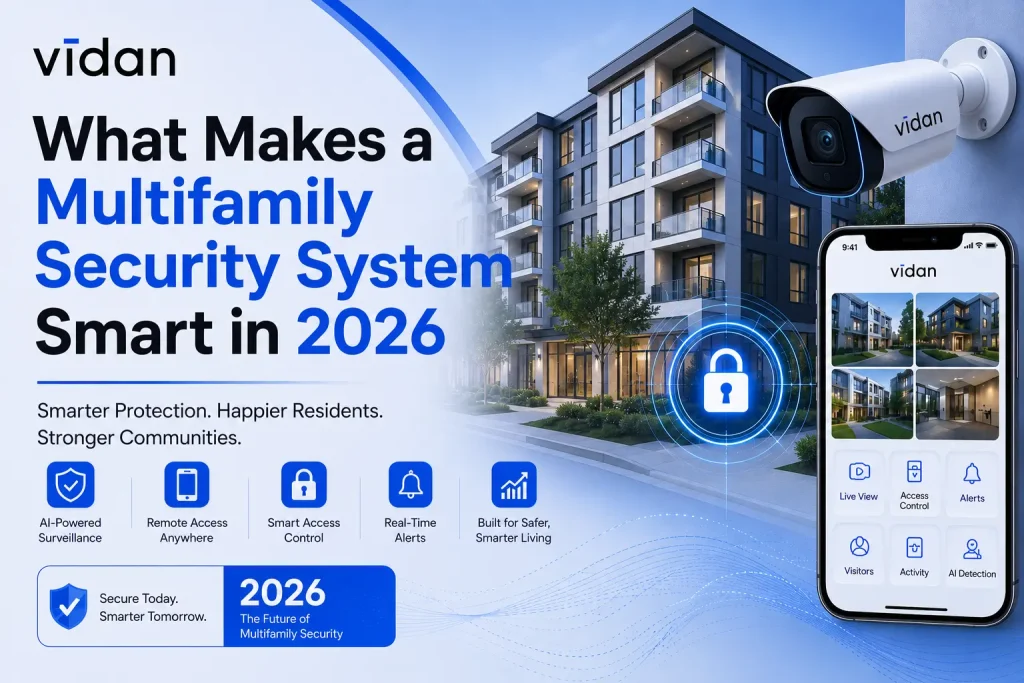
Break ins happen when nobody is watching. Blind spots in stairwells, dim parking levels, and tailgating residents give intruders every advantage. Property managers who still rely on old CCTV cameras are losing that fight every single day.
Multifamily security challenges have grown far beyond broken locks and missing badges. Today they include drone surveillance gaps, package theft rings, and residents who prop doors open for convenience. A smart system does not just record these problems. It stops them before they escalate.
This blog breaks down what actually makes a multifamily security system smart in 2026, and why property owners are rethinking their entire approach to safety.
Key Takeaways
- Multifamily security challenges now include tailgating, parking garage crime, and slow incident response.
- Smart systems combine AI detection, live monitoring, and instant alerts instead of passive recording.
- Parking garage security requires dedicated coverage because it remains a top target for theft and assault.
- Passive surveillance systems are being replaced by proactive, AI driven monitoring.
- Apartment community security works best when technology and human oversight operate together.
- Vidan AI helps property managers move from reactive footage review to real time threat prevention.
Why Apartment Living Has Become Harder to Protect
Multifamily properties are not single homes with one door and one alarm. They are small cities. Dozens of entry points, shared amenities, and constant foot traffic create a security puzzle that grows more complex every year.
Renters now expect the same safety standards they would get in a gated community, even in mid rise buildings. Property managers who fail to deliver often see it reflected in reviews, renewals, and reputation.
Three forces are driving this shift.
- Package deliveries have tripled since 2020, creating more theft opportunities near lobbies and mailrooms.
- Shared parking structures attract crime because they are often poorly lit and rarely monitored live.
- Residents increasingly demand mobile alerts and visible safety measures before signing a lease.
These pressures are exactly why multifamily security challenges cannot be solved with a single camera pointed at the front door anymore.
The Parking Garage Problem Nobody Talks About Enough
Ask any property manager where most incident reports come from and parking structures usually top the list. Poor lighting, blind corners, and long stretches without foot traffic make these areas easy targets.
What Typically Goes Wrong
Common issues in shared parking areas include the following.
- Vehicle break ins during late night hours
- Assaults near stairwells and elevators
- Tailgating through vehicle gates
- Vandalism that goes unnoticed for days
Parking garage security cannot rely on cameras that simply record. By the time someone reviews old footage, the damage is already done. Smart systems flag suspicious movement the moment it happens, not the next morning.
A Smarter Fix
AI powered cameras can now detect loitering, unusual vehicle patterns, and forced entry attempts in real time. Alerts go straight to a monitoring team, who can intervene through live audio before a situation escalates. This shift from static footage to active response is explained in more detail in Why Real-Time Threat Detection Is Becoming the New Standard in Physical Security.
Passive Cameras Are Quietly Failing Property Owners
For years, property owners assumed more cameras meant better security. That assumption no longer holds up.
Passive surveillance systems only capture what happened after the fact. Nobody is watching at the moment, so a break in, fight, or trespasser walks away long before anyone reviews the tape. Insurance claims pile up, residents lose trust, and management teams spend hours combing through hours of footage for a five second incident.
Here is the shift happening across the industry right now.
- Old approach: Record and store footage, review only after an incident is reported.
- New approach: Detect unusual behavior instantly, alert a live team, and intervene before harm occurs.
This is the core difference between a system that simply exists and one that actually protects people. Modern AI video surveillance closes that gap by turning static cameras into active security tools.
What Apartment Community Security Actually Requires in 2026
Residents are not just asking for cameras anymore. They want visible, responsive protection that feels personal rather than generic.
Apartment community security in 2026 typically includes these layers working together.
- AI cameras that detect weapons, loitering, and unauthorized access
- Mobile alerts sent to residents during active incidents
- Two way audio that allows guards to intervene remotely
- Access control tied to resident credentials instead of shared keys
- Integration with local law enforcement for faster response times
None of these features work in isolation. A camera without an alert system is just a recorder. An alert system without a human response plan is just noise. The strength of apartment community security comes from how well each piece connects to the next.
Building Trust Through Visibility
Residents feel safer when they can see security working, not just assume it exists. Well placed signage, active patrol notifications, and visible cameras all contribute to a sense of protection that goes beyond the technology itself.
Faster response also matters more than most owners realize. Systems built around live detection dramatically cut the time between an incident occurring and someone acting on it.
The Five Traits of a Genuinely Smart System
Not every AI labeled camera qualifies as smart. Here is what separates a modern system from a marketing buzzword.
- Real time detection. The system flags threats as they happen, not hours later.
- Human backed monitoring. AI flags the event, but a trained person confirms and responds.
- Multi site visibility. Property managers overseeing several buildings can monitor everything from one dashboard.
- Behavioral analysis. The system distinguishes between a resident walking their dog and a stranger casing a building.
- Scalable coverage. Adding new cameras or buildings does not require rebuilding the entire system.
Properties that check all five boxes see fewer incidents, faster resolutions, and stronger resident retention.
How Vidan AI Approaches Multifamily Protection
Vidan AI was built around one belief. Security should stop problems, not just document them.
Instead of dropping cameras across a property and hoping someone reviews the footage later, Vidan AI pairs intelligent detection with live human oversight. When a camera flags something unusual, a trained monitoring specialist reviews it within seconds and can speak directly through the camera to deter the threat.
This model directly addresses the biggest gap in traditional multifamily setups. Cameras that only record cannot stop a crime in progress. Cameras backed by real time monitoring can.
Property owners working with Vidan AI typically see three measurable shifts.
- Fewer repeat incidents in parking structures and common areas
- Faster resolution times when something does occur
- Lower liability exposure tied to unmonitored blind spots
The financial impact of this shift is significant too. Many owners discover that proactive monitoring reduces costs tied to claims, vacancies, and turnover, a topic explored in Remote Video Monitoring ROI: How Vidan AI Transforms Security Into a Strategic Asset.
Choosing the Right System for Your Property
Every property has different needs depending on size, layout, and resident demographics. That said, a few questions can guide the decision.
- Does the system detect threats live, or only record them for later review?
- Can the coverage scale as the property grows or adds buildings?
- Is there a trained team behind the technology, ready to respond immediately?
- Does the system integrate with existing access control and resident communication tools?
If the answer to any of these is no, the property is likely still relying on passive surveillance systems dressed up as modern security.
Where Multifamily Security Is Headed Next
The next few years will likely bring even tighter integration between AI detection and physical response teams. Expect more properties to adopt predictive analytics that flag risk patterns before an incident even occurs, rather than reacting once it starts.
Owners who invest early in this shift will likely see lower insurance premiums, stronger lease renewal rates, and fewer late night phone calls about incidents that could have been prevented.
Final Thoughts
Solving multifamily security challenges in 2026 requires more than extra cameras or a bigger budget. It requires a system built to detect, respond, and prevent, not one that simply watches and waits.
Vidan AI gives property owners exactly that. Real time detection, live human response, and coverage that scales with every building added to the portfolio.